
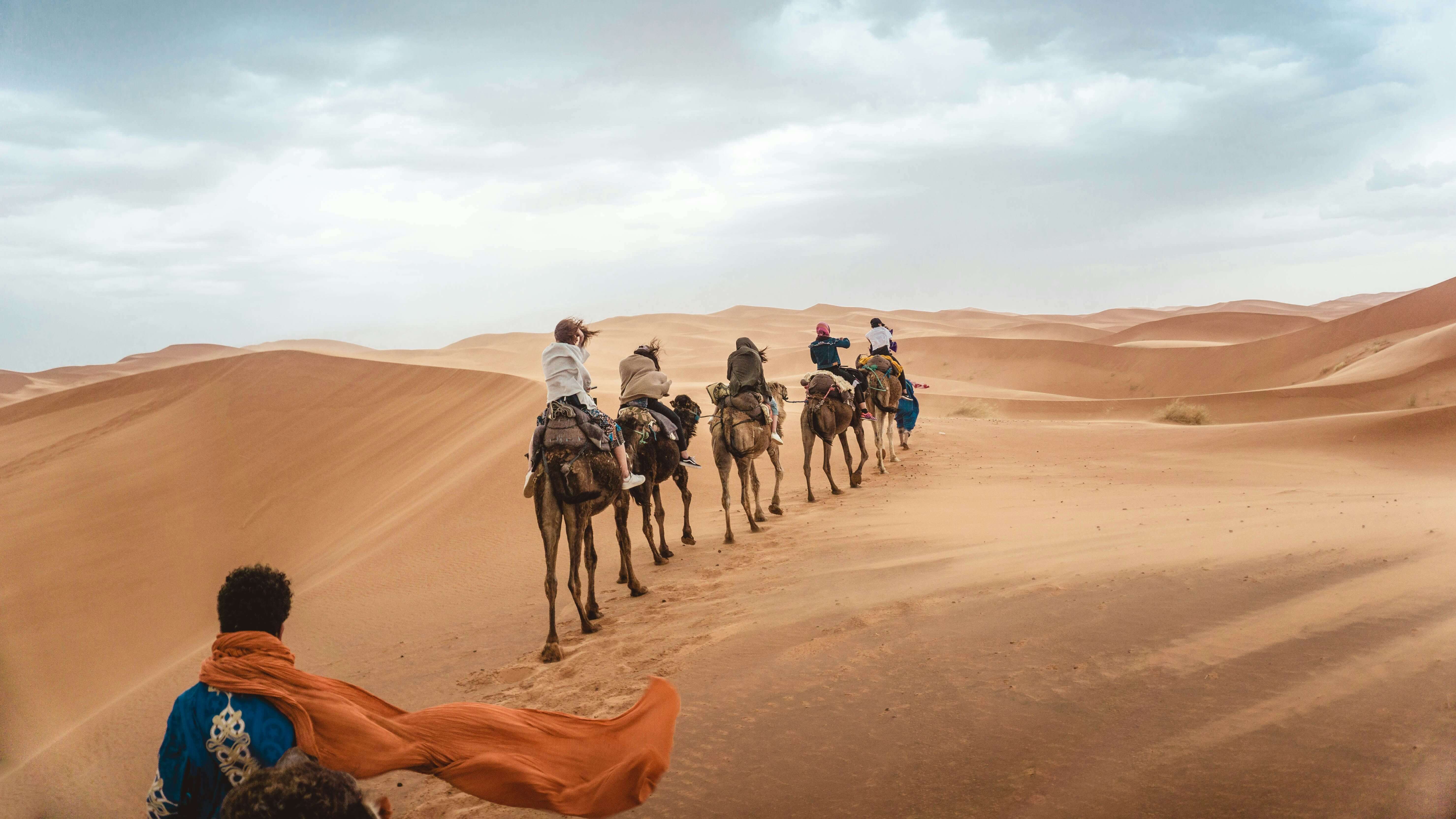
Sahara Desert from Marrakech: 2 vs 3 Days?
Choose the 3-day tour if you want the classic Sahara: the giant orange dunes of Erg Chebbi at Merzouga, with a night in the Dades Valley on the way. The 2-day trip goes to Zagora instead - smaller dunes, far less driving, and doable over a weekend. Both cross the Tizi n'Tichka pass and stop at the UNESCO ksar of Aït Benhaddou. Our 3-day Merzouga tour starts from €280 per vehicle.
By Ahlam Giyat · Travel editor at Taxi Maroc Aéroport, Marrakech · Reviewed 06/09/2026
Honest comparison of the popular desert tours - what you'll see, what you'll miss, and how to choose.
A trip to the Sahara is the highlight of many Morocco itineraries - but should you do it in two days or three? The answer depends on how far you want to go, how much driving you can handle, and whether you want to reach the towering dunes of Merzouga or the closer dunes of Zagora. This guide compares the 2-day and 3-day desert tours from Marrakech so you can choose the adventure that fits your time. Many travellers start the journey straight from the airport with a private transfer and driver.
The quick answer
If you want the classic, postcard Sahara - the giant orange dunes of Erg Chebbi at Merzouga - choose the 3-day tour. If you are short on time and happy with smaller dunes, a 2-day trip to Zagora delivers a desert taste with far less driving. More time means a richer, less rushed experience; less time means a longer day in the car.
2 days: Marrakech to Zagora
The 2-day desert tour crosses the Atlas via the Tizi n'Tichka pass, stops at the UNESCO ksar of Aït Benhaddou and Ouarzazate, and continues to Zagora, gateway to the Draa Valley. You ride camels into the dunes for sunset, sleep in a desert camp, and return the next day. It is a great option for travellers with only a weekend, though Zagora's dunes are smaller and the second day involves a long drive back.
3 days: Marrakech to Merzouga
The 3-day tour goes deeper, all the way to Erg Chebbi near Merzouga - the dramatic, cinematic dunes most people picture when they imagine the Sahara. The extra day means you also explore the rose-scented Dades Valley and the soaring walls of the Todra Gorge, with an overnight stop breaking up the drive. You earn a magical sunset camel trek, a starlit night in a desert camp, and a sunrise over the dunes that is worth every kilometre.
Merzouga vs Zagora: which dunes?
- Merzouga (Erg Chebbi): Huge, classic Sahara dunes up to 150m tall; the iconic experience - but a longer journey, best over 3 days.
- Zagora: Smaller, rockier dunes reachable in a day; good for a quick taste over 2 days.
If the Sahara is a bucket-list moment, the consensus is clear: make time for Merzouga. The difference in scenery is significant.
The desert camp experience
Nights in the desert are the heart of the trip. Standard camps offer comfortable tents, real beds, shared or private bathrooms, a hot dinner and live Berber drumming around a fire under an enormous sky. Luxury camps add en-suite tents, fine dining and plush furnishings. Either way, the silence, the stars and the dawn light on the dunes are unforgettable.
Private vs shared tours
Shared minibus tours are cheaper but run to a fixed schedule with strangers and limited stops. A private desert tour with your own driver lets you set the pace, stop for photos whenever you like, choose your camp, and travel in air-conditioned comfort - a big advantage for families, couples and small groups. You can also customise the route or add nights.
What to pack for the Sahara
- Layers: desert days are warm but nights and dawns are cold.
- A scarf or shemagh for sun and blowing sand.
- Sunglasses, high-SPF sunscreen and a hat.
- A small overnight bag - leave your main luggage in the vehicle.
- A power bank, as charging at camps can be limited.
- Cash for tips, drinks and souvenirs along the way.
How much driving is involved?
Be realistic: the Sahara is far from Marrakech. The 2-day trip means two long driving days; the 3-day trip spreads the distance more comfortably with scenic stops. The roads are spectacular but winding over the Atlas - a calm, experienced driver makes all the difference, and lets you relax and enjoy the ever-changing landscape rather than gripping the wheel.
Best time of year for the desert
The Sahara is a destination of extremes. Aim for spring (March–May) or autumn (September–November), when daytime dune temperatures are pleasant and nights are cool but bearable. High summer is punishing - midday heat on the dunes can be dangerous - while winter days are mild and sunny but nights are very cold, so pack accordingly. Whatever the season, the desert's beauty never disappoints.
What the camel trek is really like
The sunset camel trek is the signature moment. You'll ride in a caravan over the dunes for around an hour to reach the camp - magical, though the saddles take some getting used to. Wear long trousers, hold on at the steep bits, and have your camera ready for the shifting light. Prefer not to ride? You can often reach the camp by 4x4 instead; just let your driver know.
Activities beyond the camel ride
- Sandboarding down the dunes at Erg Chebbi.
- Quad biking or 4x4 dune excursions.
- Visiting nomad families and Gnawa musicians in Khamlia.
- Stargazing - the Sahara has some of the clearest night skies on Earth.
- Sunrise over the dunes, often the trip's most memorable moment.
Is it suitable for kids and older travellers?
Yes - with a private tour. The flexibility to set your own pace, stop often and choose comfortable hotels and camps makes the long journey manageable for families and older travellers alike. Camel rides are optional, 4x4 transfers to camp are available, and you can break the drive however suits you. A shared minibus, by contrast, runs to a rigid schedule that can be tiring.
Longer trips and one-way crossings
If you have more time, a 4-day tour adds the Draa Valley, more dunes time, and a slower pace. You can also do a one-way desert crossing, ending in Fes instead of returning to Marrakech - a brilliant way to see more of Morocco in a single trip. Because it's private, the route is yours to shape; just tell us your dates and interests and we'll build it around you.
Costs and what's included
A private desert tour typically includes your vehicle and driver, accommodation (hotels plus the desert camp) and the camel trek. Lunches, drinks, some monument entry fees and tips are usually extra, so budget a little cash for the road. Luxury camps cost more than standard ones. Always confirm exactly what's included before you book so there are no surprises in the dunes.
Travel the desert responsibly
The Sahara and the communities who live there deserve respect. Choose camps that manage water and waste carefully, avoid single-use plastics, and tip the camel handlers and camp staff who make your night special. Buy crafts directly from local cooperatives along the route, ask before photographing people, and keep noise down so everyone can enjoy the desert silence. Responsible choices help keep this extraordinary landscape and culture thriving for future travellers.
Combine the desert with the rest of your trip
A desert tour pairs perfectly with the highlights along the way - the Atlas passes, Aït Benhaddou, Ouarzazate's film studios, and the Dades and Todra gorges are all part of the journey, not just the dunes. Back in Marrakech, balance the adventure with a relaxed day in the medina and a restorative hammam. Because your tour is private, we can fine-tune the timing so you return rested and ready, not rushed.
Booking your desert adventure
When you're ready to book, decide first between 2 and 3 days, then between standard and luxury camps, and finally whether you'd like any add-ons such as sandboarding or a one-way finish in Fes. Share your group size, dates and interests, and a good operator will tailor the route, the hotels and the pace around you. Going private from the start means no waiting on strangers, no rigid timetable, and a driver who becomes part of the story. It's the difference between ticking off the Sahara and truly experiencing it.
Final thoughts
Choose the 2-day Zagora trip if time is tight and you just want a desert taster; choose the 3-day Merzouga tour if you want the real, breathtaking Sahara with the dunes of your imagination. Whichever you pick, going private means comfort, flexibility and a stress-free ride. Ready to chase the dunes? Plan your Sahara desert tour with a private driver today - we can even collect you straight from the airport.
Book your transfer
Book NowFrequently asked questions
Do I need 2 or 3 days for the Sahara from Marrakech?
Three days for Merzouga and the Erg Chebbi dunes, 560 km away. Two days only reaches Zagora, about 360 km, where the dunes are considerably smaller.
What is the difference between Zagora and Merzouga?
Merzouga opens onto Erg Chebbi, where the dunes reach 150 m. Zagora is closer and cheaper but the erg is much smaller - the difference is obvious the moment you arrive.
How many hours of driving each day?
On the 3-day trip: 8 to 9 hours on day one, about 6 hours on day two, and close to 10 hours on day three.
Is it cold at night in the desert?
From November to March, often close to freezing, even though the day may have reached 25 °C. A fleece and long trousers are essential even if you arrived in summer clothes.
Can I do the Sahara as a day trip from Marrakech?
No. Even Zagora is around 7 hours each way. Anyone offering the Sahara in a day means Agafay, a stone desert 30 km from Marrakech.